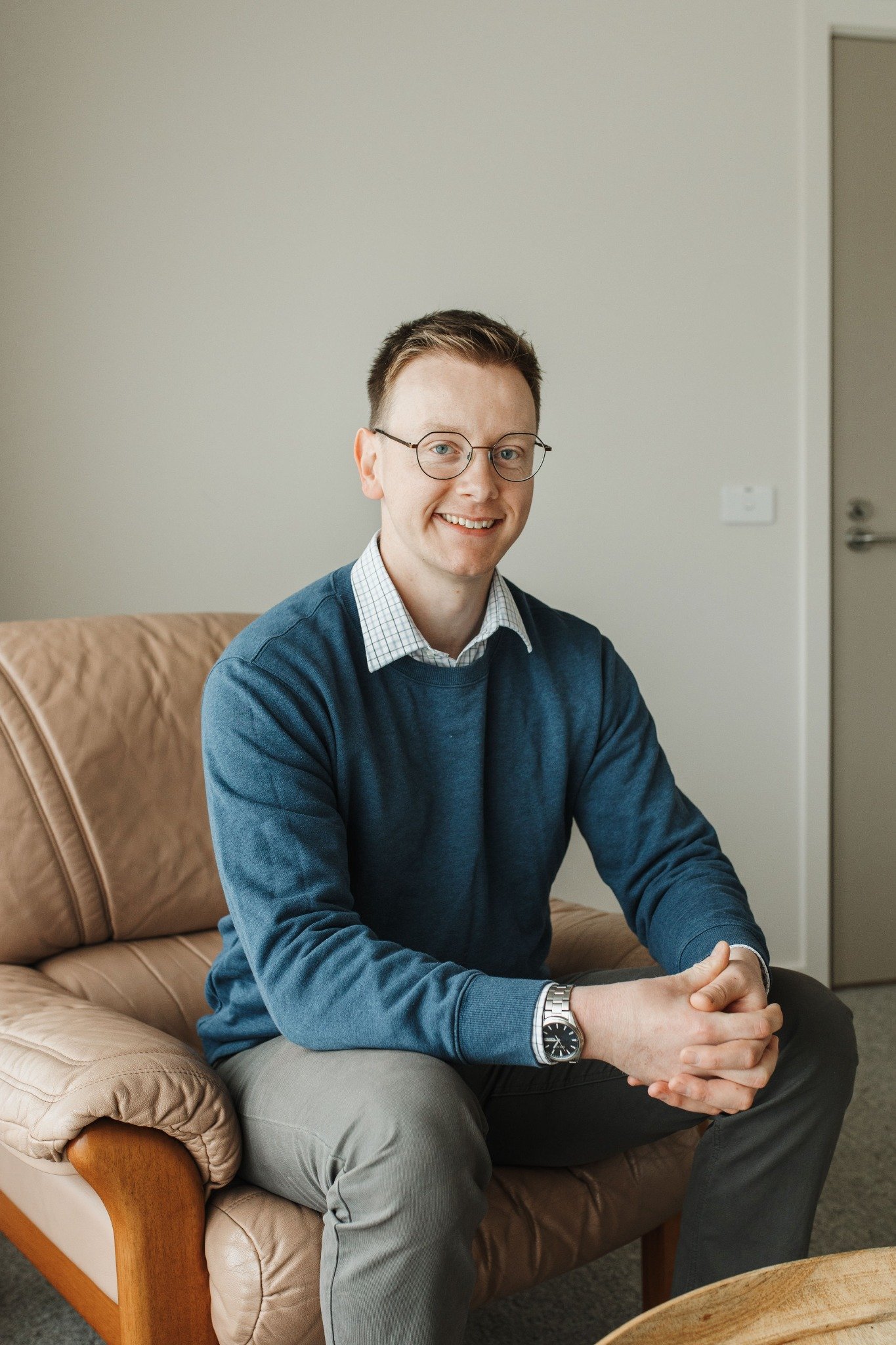
About Matthew
A thoughtful, practical and collaborative approach
Matthew Eden is a registered psychologist with a Master of Professional Psychology. He is a member of the Australian Association of Psychologists Inc and an Associate Member of the EMDR Association of Australia. He works with children, adolescents and adults, with particular interests in neurodivergence, trauma and post-traumatic stress, burnout and toxic resilience.
Professional background
Before becoming a psychologist, Matthew worked in youth residential care and as a disability support worker. He completed his provisional psychology training within employment services, including mainstream and inclusive employment settings, and has since worked in private practice as a general psychologist. These roles shaped his understanding of practical barriers, the importance of safety and trust, and the need for psychological care to be client-centred.
How Matthew works
Matthew aims to help clients understand patterns, build useful tools and work toward meaningful, sustainable change outside the therapy room. Treatment is collaborative, person-centred and strengths-based, and is adjusted in response to feedback. Where helpful, therapy may include attention to how stress affects the body’s threat and regulation systems, without treating this as a substitute for medical care.
Therapeutic approaches
Depending on the agreed plan, Matthew may draw from CBT, EMDR, ACT, behavioural strategies, motivational interviewing and DBT-informed emotion-regulation or interpersonal skills. Approaches are discussed collaboratively and reviewed over time.
Neurodivergence
Matthew supports autistic people, people with ADHD and people exploring how neurodivergence affects daily life. Therapy may focus on understanding patterns, reducing unnecessary self-blame, developing workable strategies and navigating poorly matched environments. Formal autism, ADHD and cognitive assessments are not offered.
Trauma
Matthew is particularly interested in working with the effects of single distressing events, repeated adversity and experiences that have accumulated over time. Trauma-focused work is paced carefully and begins with a shared understanding of the client’s needs, stability, preferences and goals.
Burnout and toxic resilience
People sometimes give a hesitant yes when asked to give more because, technically, they can. Often those same people have had little opportunity to pause, reflect and ask whether they should have to keep doing so. Therapy may involve understanding the conditions contributing to burnout, rebuilding capacity and finding a more sustainable relationship with work, responsibility and rest.
A little more about Matthew
Matthew was diagnosed with ADHD as an adult. This personal experience informs his appreciation of the relief, complexity and re-evaluation that can follow later identification; it does not mean every neurodivergent person’s experience is the same.
Qualifications and memberships
Master of Professional Psychology; Registered Psychologist; Member, Australian Association of Psychologists Inc; Associate Member, EMDR Association of Australia.